
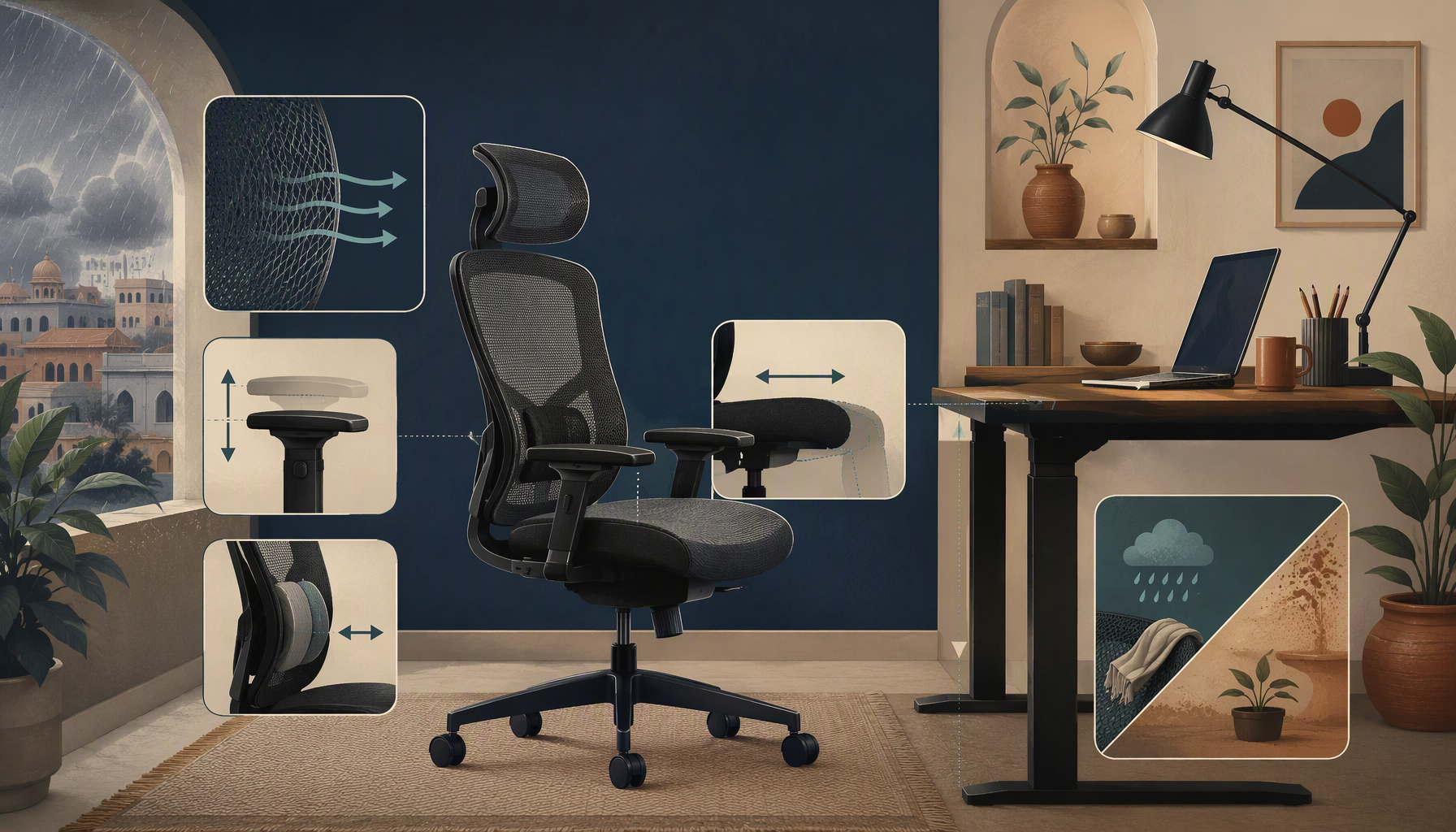
An office chair can have many features and still be wrong for the user’s height, desk, sitting pattern, heat, room, or service expectations. This guide is written for an Indian professional spending long periods at a desk and turns the shopping problem into a sequence of checks before a product shortlist.
What this decision requires
| Decision area | What to check | Why it matters |
|---|---|---|
| Fit | Seat height, depth, width, back height, lumbar position, and armrests. | Adjustability helps only when it fits the user and desk. |
| Movement | Reaching, turning, standing, sitting duration, and break pattern. | A fixed posture is not a complete work solution. |
| Heat and care | Mesh, padding, dust, cleaning, sweat, and monsoon conditions. | Material affects daily comfort and maintenance. |
| Service | Assembly, warranty, parts, delivery damage, and return. | Large furniture creates higher return friction. |
Build the decision around the real situation
Choose the user and desk before the chair. Height, thigh length, desk height, screen position, footwear, and work pattern affect whether a chair’s adjustments are useful. A chair can have many levers and still leave the user perched too high, unable to reach the floor, or unable to sit close enough to the desk.
Long work hours also need movement planning. The chair should allow stable work without forcing one posture all day. Check seat depth, edge pressure, back support, armrest position, recline, wheel movement, and whether the chair fits the desk and room. “Ergonomic” is a label to investigate, not a guarantee.
What not to assume from a listing
- A product photograph does not prove fit, comfort, durability, or suitability.
- A rating does not replace exact specifications, variant details, seller information, or returns.
- A low price does not prove low ownership cost.
- A “premium” or “versatile” label does not explain the actual tradeoff.
- A delivery promise must be checked for the intended pin code and current order date.
India-specific use and ownership
In Indian conditions, heat, dust, cleaning, delivery, assembly, and warranty support matter. Check the return process for a large item and record the seller and service promise. Compare the chair with the whole setup rather than treating it as a standalone comfort fix.
Avoid choosing by maximum feature count, influencer language, or a photograph of a tall model. If the dimensions, adjustment range, assembly, and return path are unclear, the risk is high.
Use a decision note before payment
Write down the option you are considering, the job it must do, the evidence that supports it, and the uncertainty that remains. If the decision depends on a measurement, seller promise, delivery date, warranty, or return condition, verify that item on the current listing rather than relying on an old comparison or a search snippet.
After purchase, keep the invoice, variant, warranty information, and return deadline together. If the product fails the original job, record the reason. That creates a better future decision and helps Bazaar improve its category guidance without inventing a test result or treating one shopper’s experience as universal evidence.
Before you order
- Record the exact product, seller, variant, price, and date checked.
- Verify the dimensions, fit, material, compatibility, care, warranty, and return path.
- Write one reason to buy and one reason not to buy.
- Check whether the item solves a genuine gap or duplicates something already owned.
- Re-check current terms immediately before payment.
Frequently Asked Questions
Is a high-back chair always better?
Not necessarily. Useful back height and support depend on the user, desk, room, and movement needs.
What should I verify before buying a chair online?
Check dimensions, load, adjustment range, assembly, warranty, delivery damage process, and return policy.
Can a chair solve all long-work-hour discomfort?
No. Desk height, screen position, movement breaks, lighting, and work habits also matter.