
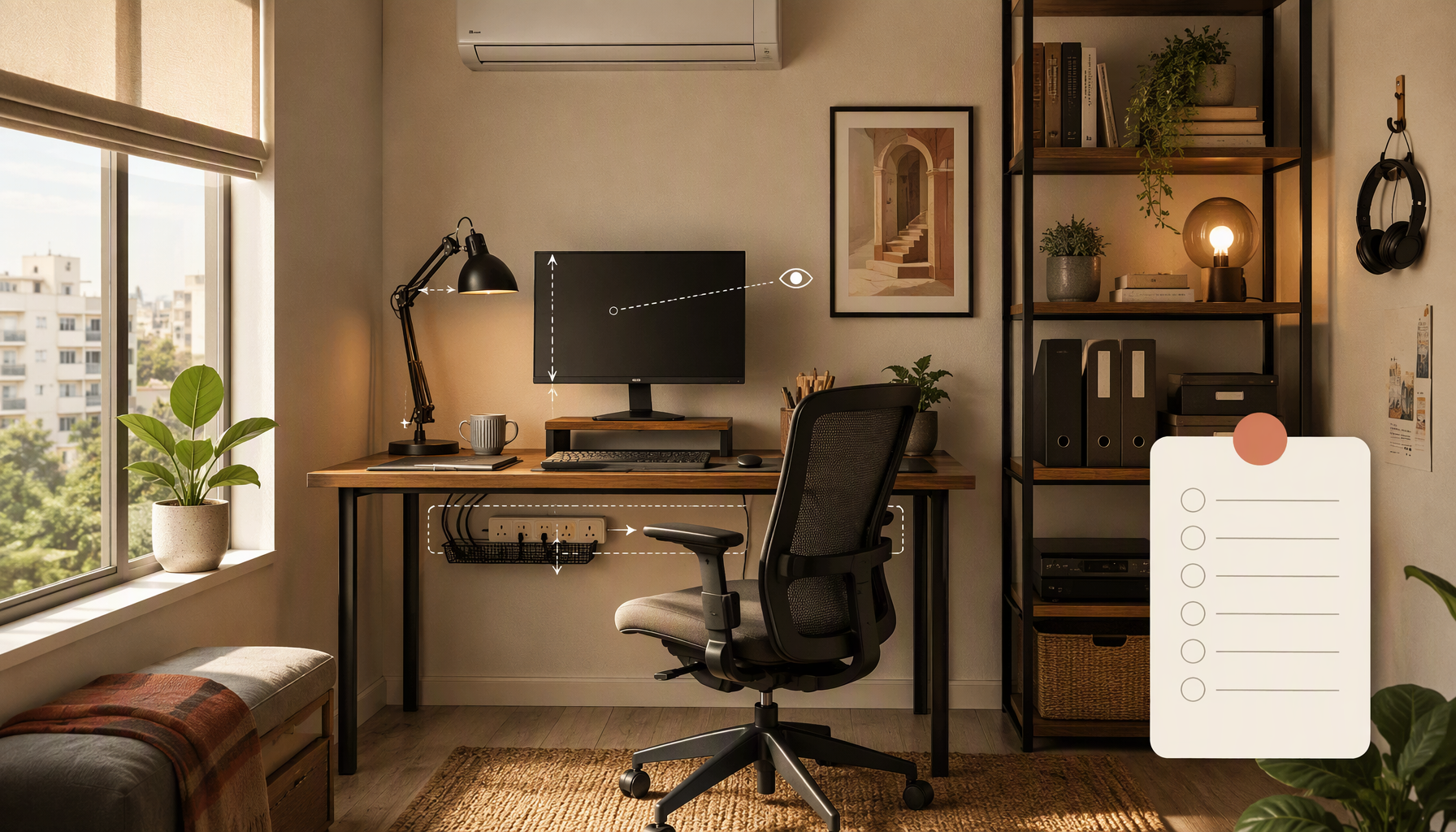
Home-office shopping often starts with a desk or chair before the room, power, heat, light, storage, internet, and work routine have been mapped. This guide is written for an Indian home worker building a reliable workspace and turns the shopping problem into a sequence of checks before a product shortlist.
What this decision requires
| Decision area | What to check | Why it matters |
|---|---|---|
| Space | Desk footprint, chair movement, doorway, storage, background, and shared-room needs. | Prevents buying furniture that blocks the room. |
| Work comfort | Screen height, seat support, keyboard, light, glare, and movement breaks. | A product list cannot replace a usable setup. |
| India conditions | Heat, dust, monsoon, power, fan/AC, and internet backup. | The setup must survive local working conditions. |
| Budget order | Essential now, useful later, and decorative last. | Protects the budget from low-value upgrades. |
Build the decision around the real situation
A home office is a system rather than a desk. Start by writing the work: laptop calls, writing, design, study, customer support, or long spreadsheet sessions. Then measure the room and decide what must remain available for family, storage, movement, or other uses. A visually impressive setup can still fail if it creates glare, heat, noise, cable clutter, or an uncomfortable chair position.
Next, solve the high-impact basics: stable work surface, supportive seating, screen height, keyboard position, usable light, power access, internet reliability, and a way to move. In India, heat, dust, monsoon, power interruptions, fan or AC placement, and shared-room privacy may matter as much as furniture features.
What not to assume from a listing
- A product photograph does not prove fit, comfort, durability, or suitability.
- A rating does not replace exact specifications, variant details, seller information, or returns.
- A low price does not prove low ownership cost.
- A “premium” or “versatile” label does not explain the actual tradeoff.
- A delivery promise must be checked for the intended pin code and current order date.
India-specific use and ownership
Separate the setup into now, later, and decorative. Buy only what solves a current work problem. The Home and Workspace hub can then route you to standing-desk, chair, lighting, and accessory decisions when the room map shows a genuine gap.
Avoid buying a complete aesthetic setup before measuring the room and identifying the work routine. The most expensive piece is not always the most important piece.
Use a decision note before payment
Write down the option you are considering, the job it must do, the evidence that supports it, and the uncertainty that remains. If the decision depends on a measurement, seller promise, delivery date, warranty, or return condition, verify that item on the current listing rather than relying on an old comparison or a search snippet.
After purchase, keep the invoice, variant, warranty information, and return deadline together. If the product fails the original job, record the reason. That creates a better future decision and helps Bazaar improve its category guidance without inventing a test result or treating one shopper’s experience as universal evidence.
Before you order
- Record the exact product, seller, variant, price, and date checked.
- Verify the dimensions, fit, material, compatibility, care, warranty, and return path.
- Write one reason to buy and one reason not to buy.
- Check whether the item solves a genuine gap or duplicates something already owned.
- Re-check current terms immediately before payment.
Frequently Asked Questions
What should I buy first for a home office?
Start with a workable surface, chair, screen height, light, power, and internet reliability before decorative accessories.
How much should a home office cost?
It depends on what you own and the work requirement. Separate essential setup cost from later comfort and styling upgrades.
Should I buy a standing desk immediately?
Only if the room, desk height, chair, screen, and work routine support it. The checklist should come before the product.