
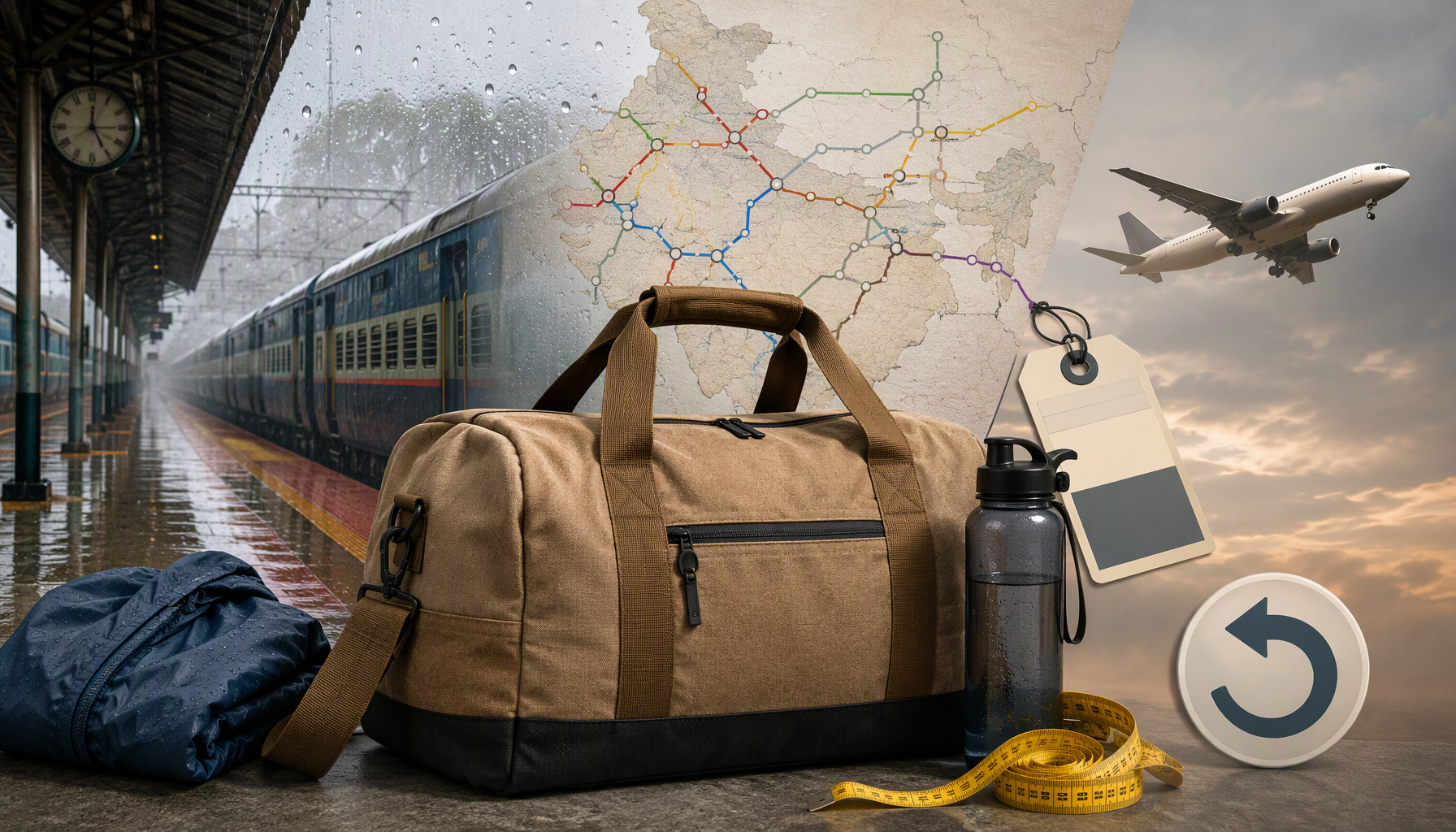
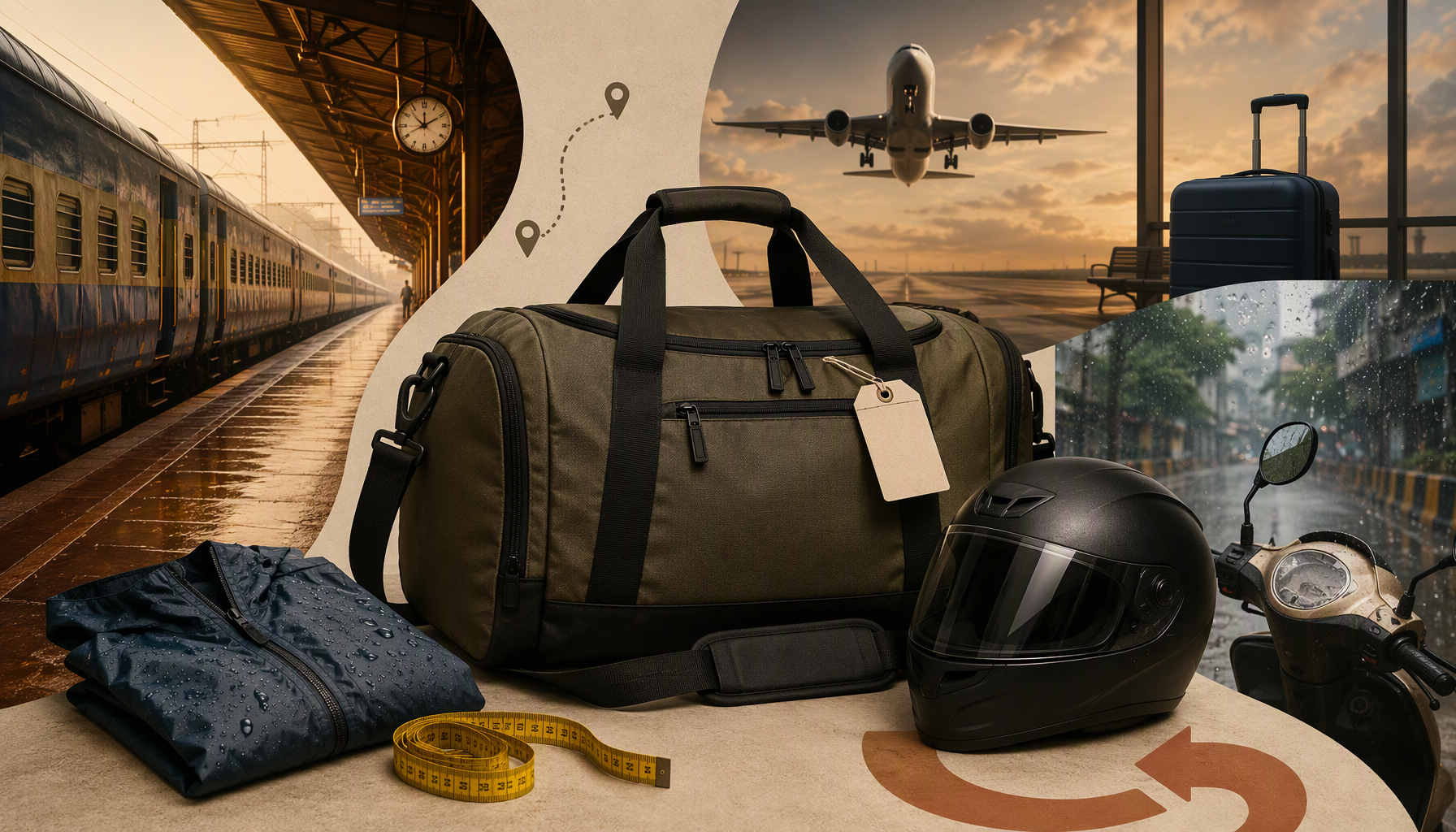
A travel bag that looks useful online can fail on an Indian train, flight, bus, two-wheeler, monsoon walk, or crowded transfer because the route was never considered. This guide is written for an Indian traveler choosing a bag for a real route and turns the shopping problem into a sequence of checks before a product shortlist.
What this decision requires
| Decision area | What to check | Why it matters |
|---|---|---|
| Route | Train, flight, bus, car, two-wheeler, or walking. | Transport changes size, access, security, and weather needs. |
| Load | Clothing, laptop, bottles, documents, chargers, and shoes. | Capacity should match what you actually carry. |
| Protection | Material, closure, padding, rain exposure, and security. | The bag must protect contents and survive the route. |
| Ownership | Weight, cleaning, repair, warranty, delivery, and return. | An empty heavy bag creates a daily cost. |
Build the decision around the real situation
A route gives a bag its job. A flight trip may prioritize dimensions and access; a train journey may prioritize security and compression; a two-wheeler commute may prioritize weather and stable straps. Start by listing what you carry, where it sits, how often you access it, and what exposure it receives.
Capacity should not be measured only in litres. Check empty weight, internal dimensions, opening, laptop or shoe compartment, bottle space, compression, handle, strap, and whether the bag remains comfortable when full. A larger bag can encourage overpacking and become difficult on stairs or crowded transport.
What not to assume from a listing
- A product photograph does not prove fit, comfort, durability, or suitability.
- A rating does not replace exact specifications, variant details, seller information, or returns.
- A low price does not prove low ownership cost.
- A “premium” or “versatile” label does not explain the actual tradeoff.
- A delivery promise must be checked for the intended pin code and current order date.
India-specific use and ownership
Indian travel also creates weather and service questions. Check monsoon exposure, cleaning, zips, stitching, warranty, delivery, replacement, and return terms. Use the Travel and Everyday Carry hub for the next guide, then compare products by the same criteria instead of mixing incomparable bag types.
Avoid choosing because the bag looks spacious or travel-ready in a photograph. If the empty weight, dimensions, closures, and return path are unclear, do not treat capacity as the main benefit.
Use a decision note before payment
Write down the option you are considering, the job it must do, the evidence that supports it, and the uncertainty that remains. If the decision depends on a measurement, seller promise, delivery date, warranty, or return condition, verify that item on the current listing rather than relying on an old comparison or a search snippet.
After purchase, keep the invoice, variant, warranty information, and return deadline together. If the product fails the original job, record the reason. That creates a better future decision and helps Bazaar improve its category guidance without inventing a test result or treating one shopper’s experience as universal evidence.
Before you order
- Record the exact product, seller, variant, price, and date checked.
- Verify the dimensions, fit, material, compatibility, care, warranty, and return path.
- Write one reason to buy and one reason not to buy.
- Check whether the item solves a genuine gap or duplicates something already owned.
- Re-check current terms immediately before payment.
Frequently Asked Questions
What size travel bag should I buy?
Start with trip length, transport rules, weather, laundry access, and what must remain accessible.
Is a waterproof label enough for monsoon travel?
No. Check closures, seams, exposed zips, material, and the protection the route actually requires.
Is a larger bag always better?
No. Empty weight, access, comfort, and overpacking can make a smaller bag more useful.