
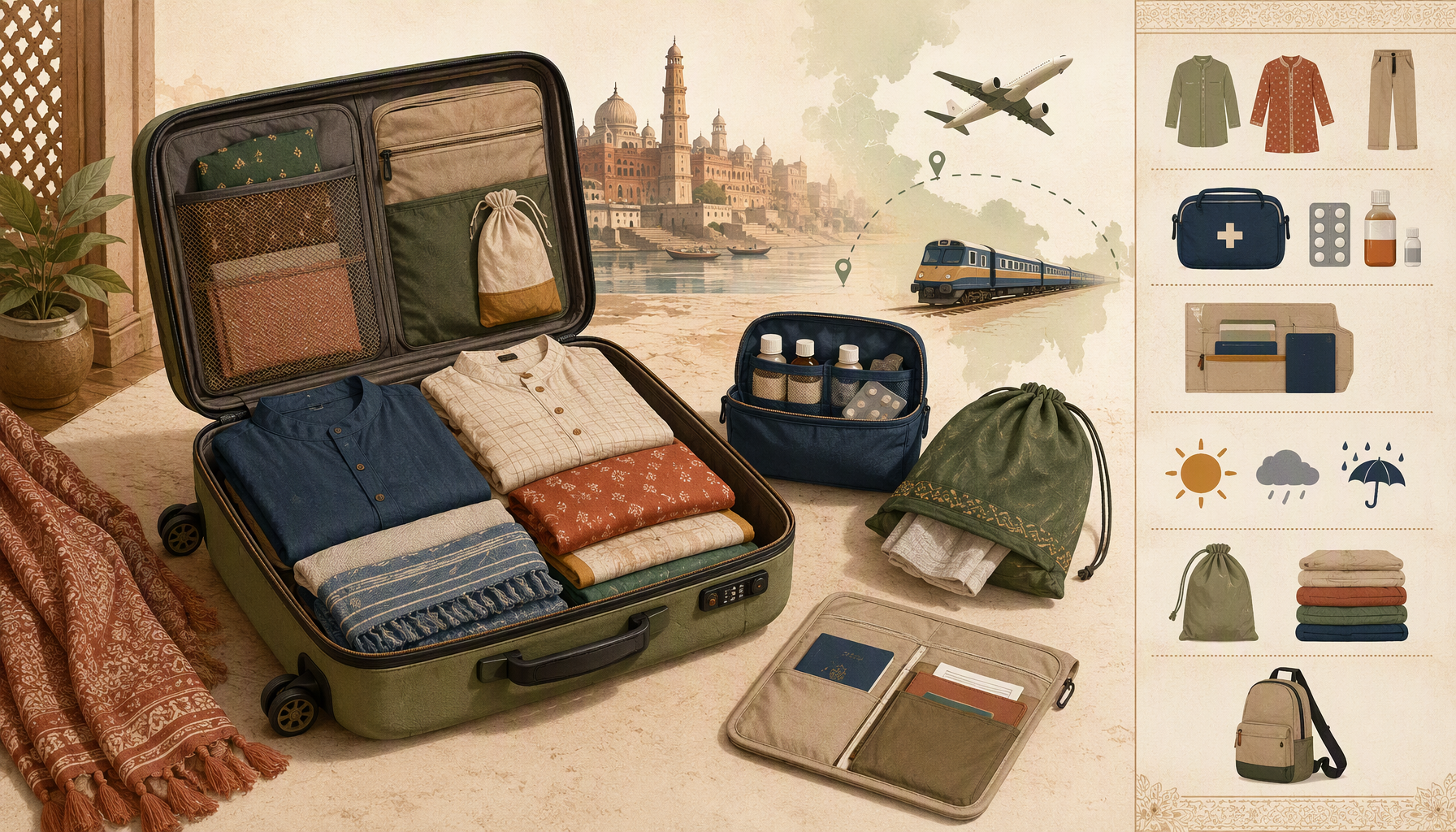
Packing lists fail when they copy a destination list without considering route, weather, laundry, luggage, activity, and how the traveler will move through the day. This guide is written for an Indian traveler planning what to carry for a specific trip and turns the shopping problem into a sequence of checks before a product shortlist.
What this decision requires
| Decision area | What to check | Why it matters |
|---|---|---|
| Route | Flight, train, bus, road trip, or two-wheeler. | Access and luggage limits change by transport. |
| Weather | Heat, rain, cold, humidity, and indoor AC. | Layers and footwear need to match actual conditions. |
| Duration | Trip days, laundry access, and repeated outfits. | Avoids both overpacking and missing essentials. |
| Daily carry | Documents, medicine, chargers, water, and valuables. | The day bag needs its own plan. |
Build the decision around the real situation
Start with the route and not the destination list. A flight, train, bus, road trip, and two-wheeler journey each change how much you can carry, what must be accessible, how much protection you need, and when a bag or layer will be used. Add the weather and the indoor environment separately because Indian travel can move between heat, rain, cold, and AC in one day.
Next, map the duration, laundry access, activities, footwear, documents, medication, chargers, and daily carry. Repeated outfits and quick-drying layers can reduce luggage, while a ceremony, work meeting, trek, or family event may require a separate plan. The best packing list is not the longest list; it is the one that prevents the most likely failure.
What not to assume from a listing
- A product photograph does not prove fit, comfort, durability, or suitability.
- A rating does not replace exact specifications, variant details, seller information, or returns.
- A low price does not prove low ownership cost.
- A “premium” or “versatile” label does not explain the actual tradeoff.
- A delivery promise must be checked for the intended pin code and current order date.
India-specific use and ownership
Before buying a new bag or accessory, check what is already owned and what can be reused. Use the Travel and Everyday Carry hub to choose a specific product category only after the packing gap is clear. Record the seller, delivery, warranty, and return terms for anything purchased close to travel.
Avoid buying a travel product because a packing video makes it look necessary. Identify the actual route, load, weather, and storage gap first.
Use a decision note before payment
Write down the option you are considering, the job it must do, the evidence that supports it, and the uncertainty that remains. If the decision depends on a measurement, seller promise, delivery date, warranty, or return condition, verify that item on the current listing rather than relying on an old comparison or a search snippet.
After purchase, keep the invoice, variant, warranty information, and return deadline together. If the product fails the original job, record the reason. That creates a better future decision and helps Bazaar improve its category guidance without inventing a test result or treating one shopper’s experience as universal evidence.
Before you order
- Record the exact product, seller, variant, price, and date checked.
- Verify the dimensions, fit, material, compatibility, care, warranty, and return path.
- Write one reason to buy and one reason not to buy.
- Check whether the item solves a genuine gap or duplicates something already owned.
- Re-check current terms immediately before payment.
Frequently Asked Questions
How much should I pack for an India trip?
Start with route, weather, laundry access, activities, and luggage capacity rather than a fixed number of outfits.
What should stay in the day bag?
Keep documents, medication, phone power, water, essential money, and route-specific items accessible and protected.
Should I buy a new bag for every trip?
No. Buy only when the existing bag fails a real capacity, route, protection, or comfort requirement.