
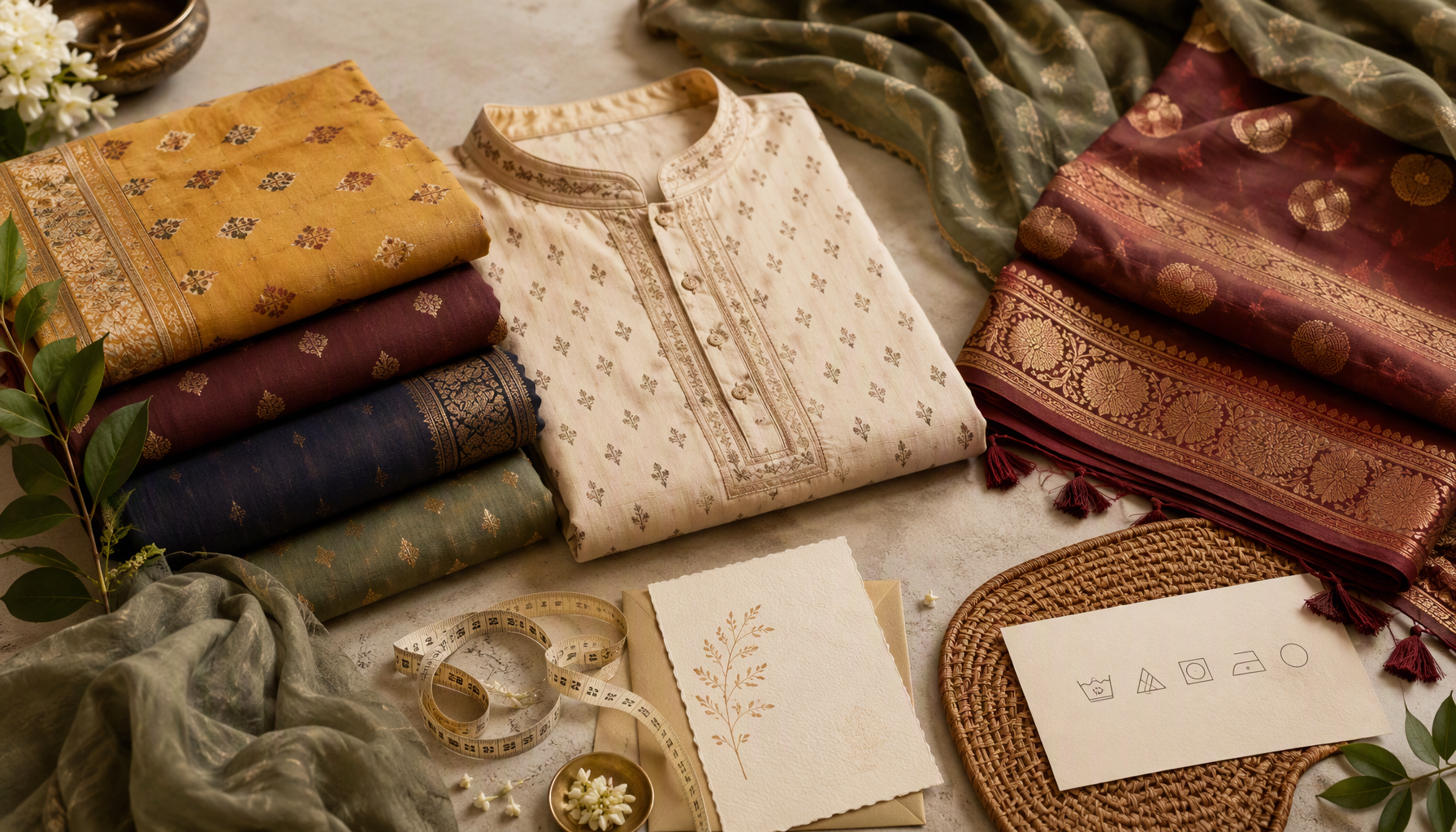
Ethnic wear combines occasion, silhouette, fabric, lining, coverage, movement, climate, culture, and sizing, but listings often reduce the decision to colour and embroidery. This guide is written for an Indian shopper choosing ethnic wear for a real occasion or routine and turns the shopping problem into a sequence of checks before a product shortlist.
What this decision requires
| Decision area | What to check | Why it matters |
|---|---|---|
| Occasion and role | Wedding, festival, office, family event, ceremony, or everyday use. | Formality and comfort change the right silhouette and amount of detail. |
| Fabric and weather | Breathability, lining, weight, transparency, drape, and care. | Heat, humidity, monsoon, and AC affect the full day, not just the photograph. |
| Fit and movement | Bust, waist, hip, sleeve, hem, drape, closure, sitting, and walking. | A product image rarely shows ease or movement. |
| Alteration and return | Size chart, alteration margin, seller, delivery, and return terms. | Altered or occasion-specific items can have higher return risk. |
Build the decision around the real situation
A strong ethnic-wear choice begins with the event brief. Note the venue, time, role, expected formality, cultural context, weather, and how much sitting, walking, photography, or travel the day involves. A wedding guest outfit, office kurta, festival set, and family ceremony outfit may share a category but not a decision.
Fabric and construction control the experience. Lining can change opacity and heat. Embellishment can add visual impact but also weight, snag risk, or care debt. A flowing fabric may be comfortable in heat but require careful transport. A structured piece may look formal but become difficult during sitting, stairs, or long ceremonies.
What not to assume from a listing
- A product photograph does not prove fit, comfort, durability, or suitability.
- A rating does not replace exact specifications, variant details, seller information, or returns.
- A low price does not prove low ownership cost.
- A “premium” or “versatile” label does not explain the actual tradeoff.
- A delivery promise must be checked for the intended pin code and current order date.
India-specific use and ownership
Use the current chart rather than assuming a familiar Indian size is universal. Check whether the garment has adjustable features, alteration margin, closure type, and return restrictions. If the purchase fills a one-time event need, consider whether a simpler, repeatable piece creates better value than a highly specific item.
Avoid choosing only by colour, model styling, or festival language. If the listing does not make fabric, lining, measurements, care, seller, and returns clear, treat the item as higher risk.
Use a decision note before payment
Write down the option you are considering, the job it must do, the evidence that supports it, and the uncertainty that remains. If the decision depends on a measurement, seller promise, delivery date, warranty, or return condition, verify that item on the current listing rather than relying on an old comparison or a search snippet.
After purchase, keep the invoice, variant, warranty information, and return deadline together. If the product fails the original job, record the reason. That creates a better future decision and helps Bazaar improve its category guidance without inventing a test result or treating one shopper’s experience as universal evidence.
Before you order
- Record the exact product, seller, variant, price, and date checked.
- Verify the dimensions, fit, material, compatibility, care, warranty, and return path.
- Write one reason to buy and one reason not to buy.
- Check whether the item solves a genuine gap or duplicates something already owned.
- Re-check current terms immediately before payment.
Frequently Asked Questions
How should I choose ethnic wear for an event?
Start with the invitation, venue, time, role, weather, movement, and formality before choosing fabric or colour.
Should I buy ethnic wear one size larger?
Not as a rule. Use the garment chart and check construction, lining, closure, and alteration options.
What is the biggest online ethnic-wear risk?
A mismatch between the photographed styling and the actual fit, fabric weight, opacity, colour, care, or return path.